Just Be Real: An Embroidery Designer's Fair-Ready Review
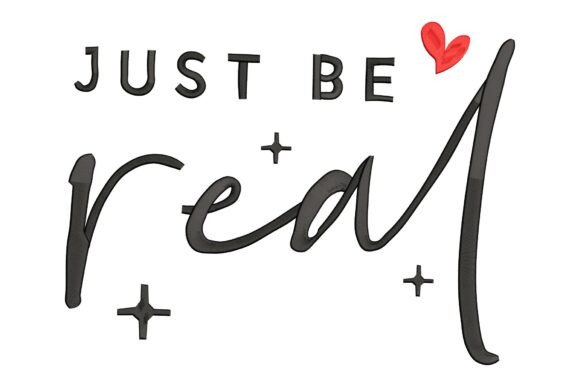
As an embroidery designer preparing for a weekend craft fair, my first task is to evaluate every design not just for its digital appeal, but for its real-world potential. When a design like Just Be Real lands in my library, I see it through the lens of the booth: the tote bags hanging from a rack, the aprons draped over a table, the caps stacked neatly. This review is that process.
The Immediate Mood & Market Fit
The title Just Be Real immediately sets a tone. It feels modern, soft, and deeply authentic. It’s not overly cute or aggressively bold. It leans into the current consumer desire for sincerity and mindfulness, which is a powerful niche in the handmade market. In a category like Inspirational, this design avoids cliché. It feels like a quiet affirmation rather than a shout, making it versatile for a wide audience—from the young customer looking for a meaningful gift to the older buyer appreciating a minimalist statement.
For my booth display, this mood means Just Be Real won’t clash with other items. It can sit beautifully alongside rustic kitchen towels and more decorative, floral pillow covers without feeling out of place. Its personality, as described, is “full,” but I interpret that as emotional fullness, not visual clutter. That’s a key selling point.
Product Performance: Where It Shines & Where to Test
The product description suggests t-shirts, tote bags, and decorative fabric pieces. That’s a good start, but for a craft fair seller, we need to think deeper.
Best Showcase Products
For maximum visual impact and perceived value at the fair, I would prioritize:
- Natural Canvas Tote Bags & Market Bags: The text’s message pairs perfectly with the utilitarian, eco-friendly nature of a bag. It feels intentional and elevates a simple bag into a statement accessory.
- Aprons (especially linen or cotton): In a kitchen context, “Just Be Real” feels like a gentle reminder to enjoy the process, making it a superb giftable handmade item.
- Pillow Covers (in neutral tones): As a decorative fabric piece for a living space, this design offers subtle inspiration without dominating a room’s decor.
- High-Quality Tea Towels: On a textured towel fabric, the embroidered texture adds a premium, tactile handmade quality that customers love to touch.
Considerations for Other Formats
For caps, patches, and small pouches, careful testing is crucial.
- Caps: The curved surface can distort lettering. Small lettering in this design could lose clarity unless the embroidery file is specifically adapted for cap hooping.
- Embroidered Patches: If the design has dense stitch areas, a patch can become overly thick and stiff. Patches also need excellent contrast to pop.
- Dark Fabric: The design’s mood might require light or bright thread colors for readability and to maintain its “soft” feel. A test on black scrap fabric is essential.
The Practical Craft Fair Production Checklist
Turning a digital embroidery file into a profitable, batch-produced craft fair product requires a disciplined approach.
Pre-Production Tests
Before committing to a production run, I follow these steps:
- Create at least one real physical mockup on the intended primary product (e.g., a canvas tote). This reveals how the fabric texture interacts with the stitches.
- Check thread contrast against several fabric colors—white, natural, grey, maybe a pastel. The design must hold its message clearly.
- Review spacing and stitch density on scrap fabric. High density on thick fabric like canvas might require a heavier stabilizer.
- Confirm the minimum practical hoop size for clean results. This dictates how small you can go—a small pouch might not be feasible if the design needs a large hoop.
- Photograph the mockup in natural booth-like light. Does it look sharp and inviting? This is critical for Etsy listings and printable mockups used as design assets online.
Batch Production & Selling Points
For the fair, I need products I can make efficiently and display powerfully.
Just Be Real appears to be an “easy to stitch” design, which is a huge advantage for batch work. Consistent results mean happy customers and a strong brand consistency across your booth. Its simplicity likely means it works well as a medium-sized focal design—not a tiny accent, not a huge centerpiece. This is ideal: it’s quickly understood at a glance by customers walking past, yet it doesn’t consume so much time or thread that your production cost skyrockets.
For buyer engagement, this design sparks conversation. It’s personal. You can imagine a customer picking up a tea towel, reading it, and nodding. That emotional connection translates directly to a sale.
Final Booth Strategy & Commercial Notes
In my booth layout, I would group Just Be Real products together to create a thematic zone. A hanging tote bag, a folded apron, and a propped-up pillow cover in similar color palettes (neutrals, soft blues, warm whites) would tell a cohesive story. This strengthens the booth display and makes the design’s value obvious.
As a small shop product, it offers versatility. The same embroidery file can generate inventory for multiple sales channels: the craft fair table, your Etsy shop, and local boutique consignment. This maximizes the return on your digital embroidery file purchase.
A crucial, final note: The description provided does not specify licensing. Always confirm commercial licensing before selling finished products. Assuming a file is for personal use only can jeopardize your business. Once confirmed, Just Be Real has the clear potential to become a reliable, sentiment-driven staple in your line of commercial embroidery products—a design that feels good to make and even better to sell.